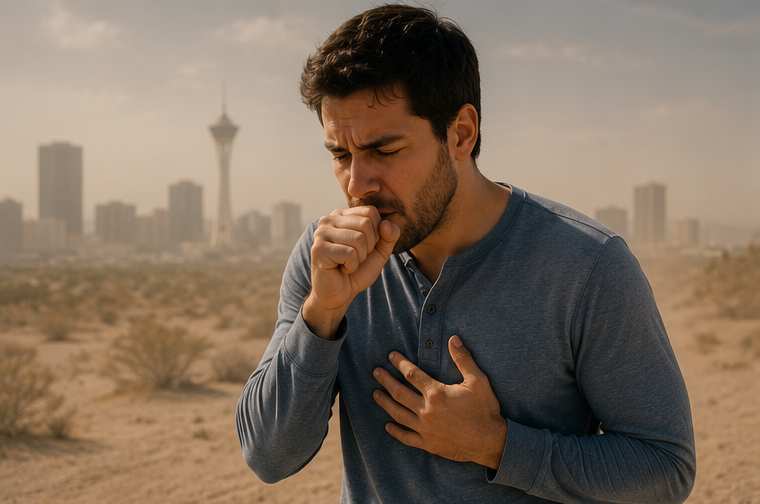
A cough that began during a dusty stretch in August and is still present in the middle of September prompts a specific kind of searching. Somewhere in that search, most Southern Nevada residents encounter the name of a soil fungus that lives in the desert ground around them, and the reading gets alarming quickly. The practical question underneath it is narrower than the search results suggest: whether this particular cough is a lingering virus, fall allergens, dust irritation, or something that warrants a specific test. That question has a reasonable answer, and it depends far more on duration and accompanying symptoms than on any single frightening possibility.
This article covers what valley fever Las Vegas symptoms generally look like, how the illness tends to unfold, and the point at which valley fever testing becomes a sensible conversation with a physician. It also covers the part that gets lost in most coverage, which is that the same two- to three-week threshold applies no matter what turns out to be causing the cough. A reader who leaves knowing when to be seen has gained more than a reader who leaves knowing one more disease name. Everything below is general education rather than an assessment of your particular symptoms.
Most Dust-Season Coughs Are Not Valley Fever
The odds are worth stating plainly before the details. Roughly 60 percent of people infected with this fungus develop minimal symptoms or none at all, and among the roughly 40 percent who do become ill, the illness commonly resembles a chest cold or a community-acquired pneumonia that resolves on its own without antifungal treatment. Southern Nevada also reports far fewer cases than Arizona does, which means the base rate for any individual cough here is low. Starting from that baseline keeps the rest of the information useful rather than frightening.
Low probability is not the same as no reason to be seen, and the reason has little to do with this specific fungus. A cough that persists past two to three weeks has moved outside the window in which most respiratory infections resolve, and it warrants evaluation whether the eventual explanation is a postviral cough, fall allergies, asthma, acid reflux, dust irritation, or a fungal infection. The threshold is the useful piece of information, because it applies to every case rather than the rare one. Blue Point’s guide to symptoms worth raising with a primary care doctor covers that broader ground, and a companion piece looks at the subtler changes physicians track during routine exams.
The Soil Fungus Behind Coccidioidomycosis and Where It Lives
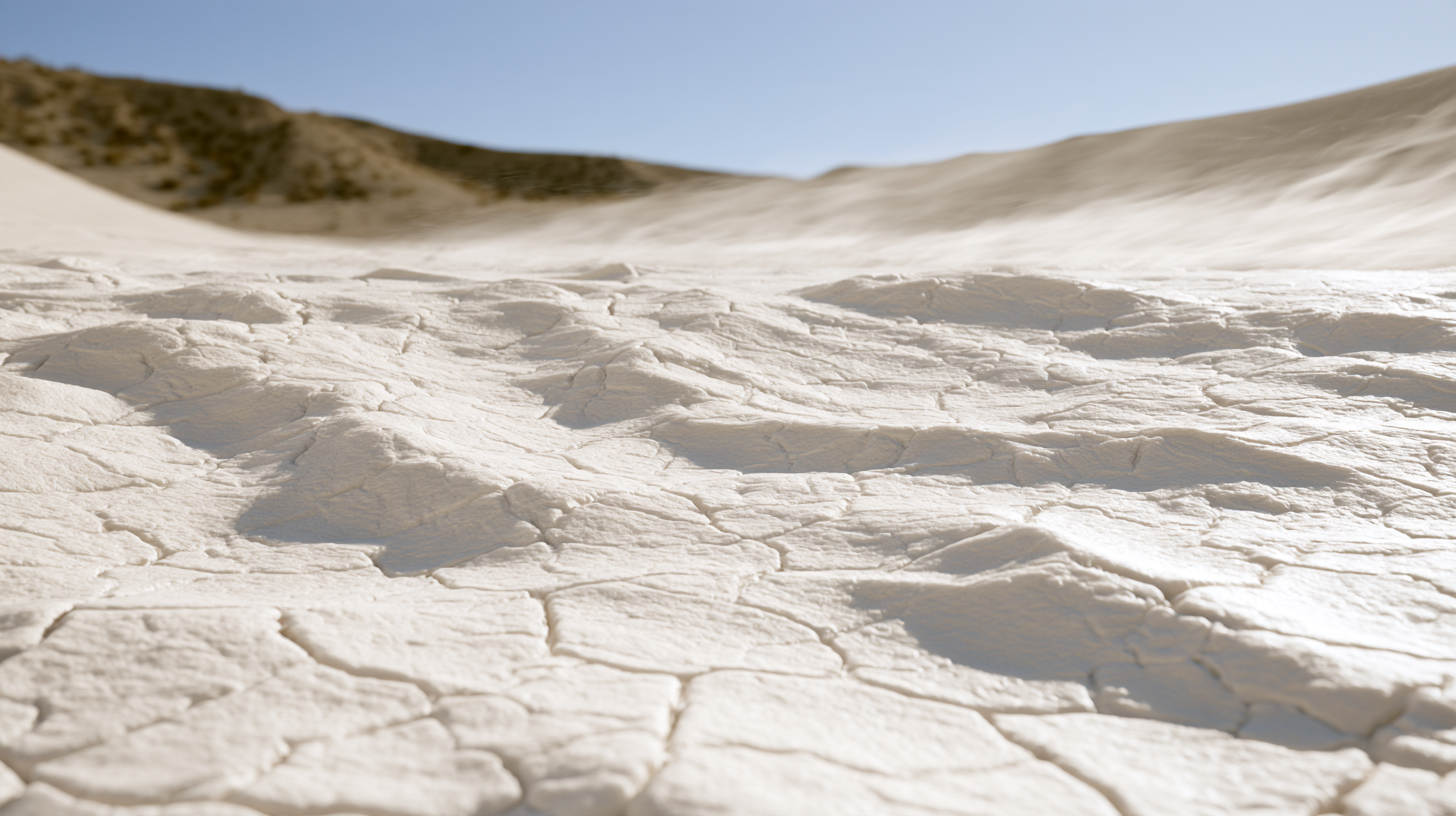
Coccidioidomycosis, which almost everyone shortens to valley fever, is an infection caused by a soil-dwelling fungus in the genus Coccidioides. The fungus lives in dry soil across parts of the southwestern United States, with Arizona and California’s Central Valley accounting for the overwhelming majority of reported cases, alongside parts of New Mexico, Texas, Utah, Nevada, and areas of Mexico and Central and South America. It is worth being precise about Nevada’s position: the state sits at the edge of the recognized range rather than at its center, and the endemic map is not static.
Researchers have documented the geographic range expanding, which is a reason to treat older maps with some caution. Living inside that geography is the entire risk factor, which is why the topic surfaces locally at all. The fungus is not something a household acquires or a person carries; it is a feature of the ground itself across a wide region.
Fungal spores become airborne when something disturbs the soil holding them, and a person breathes them in. Wind does the disturbing, and so do grading, trenching, excavation, off-road recreation, and agricultural work. The respiratory tract is where the exposure begins, and the infection does not pass from one person to another, according to the CDC. That last point resolves a common household worry: a family member with a cough is not spreading coccidioidomycosis at the dinner table.
Nevada’s case picture is considerably smaller than Arizona’s. Coccidioidomycosis is a reportable condition in Nevada, and the Southern Nevada Health District tracks Clark County cases, but the numbers involved are a small fraction of the national total: Arizona and California together account for the overwhelming majority of reported cases nationally, with Arizona alone frequently near 60 percent. One caveat applies everywhere, including here.
The CDC has estimated that the true burden of this infection may be 10 to 18 times higher than the reported count, because it is commonly misdiagnosed as bacterial or viral pneumonia, because it is reportable in only about half the states, and because many people never seek care. Most published patient education on the subject originates in Arizona and California, which is part of why valley residents often encounter the topic only after a news segment rather than through routine health information.
That gap in local coverage is worth closing, since exposure context is something a patient can offer a physician and a physician cannot guess. A resident who knows the condition exists here is more likely to mention the weekend spent riding in the desert, and that single detail sometimes changes which tests get ordered.
Seasonal Soil Disturbance in the Las Vegas Valley
The timing that drives people to search follows the calendar closely. Monsoon season runs from roughly early July into September in Southern Nevada, and the outflow winds ahead of thunderstorms lift loose desert soil across open land, construction sites, and graded parcels. The pattern researchers have described is a wet period followed by a dry one: rain supports fungal growth in the soil, and the subsequent drying and disturbance releases spores into the air. Work published in CDC’s Emerging Infectious Diseases has linked recent increases in California incidence to exactly these hydroclimatic swings, and California’s record 2024 case count followed that pattern. It is why late summer and early fall generate the most questions in the desert Southwest. A companion piece on how valley dust and air quality affect breathing covers the broader respiratory picture during those months.
Valley construction adds a second source with no connection to weather. Site grading for new housing along the valley’s edges, roadwork, and utility trenching all disturb ground that has sat undisturbed for decades, and that disturbance continues year-round. Someone living beside an active parcel encounters a different daily exposure than someone several miles away, without any storm involved.
The valley’s pattern of building outward onto previously undisturbed desert means those sites shift location from year to year. None of this is a reason to avoid new neighborhoods, though it does explain why two people in the same city may have very different exposure histories.
Who Accumulates More Soil Exposure Than Others
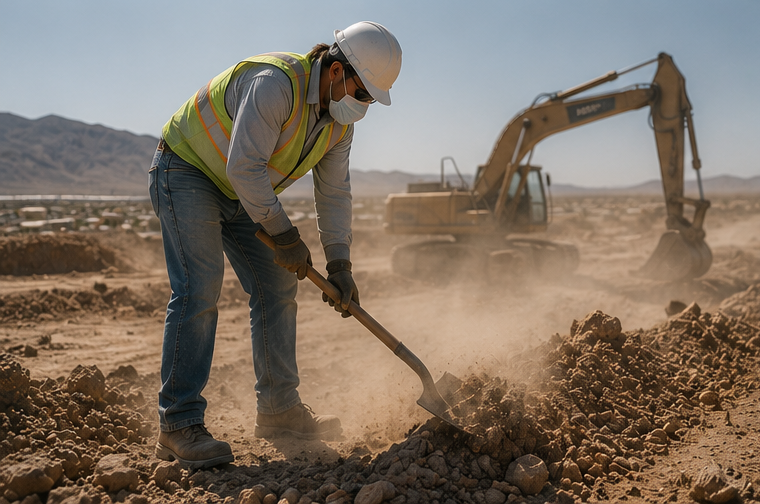
Outdoor workers in construction, landscaping, and agriculture accumulate soil exposure that an office worker simply does not, and hikers, off-road riders, and homeowners doing their own yard excavation fall somewhere between the two. None of this establishes that any individual has been infected. It describes who has the most contact with disturbed ground, which is the detail a physician weighs alongside symptoms. Occupation is often the fastest way to communicate that context during a short visit, since a physician can infer a great deal from knowing that you grade lots or install irrigation for a living.
Recent arrivals may sit at a different baseline than lifelong residents, and the reasoning follows from how immunity works here. Recovery from this infection generally confers lasting immunity, so in a genuinely endemic area a portion of long-term residents have already been exposed, often without ever knowing it, and are no longer susceptible. Newcomers have not. That is a general principle about endemic infections rather than a measured risk figure for any particular person, and it should not be read as a reason for a new resident to worry or a longtime resident to relax. That distinction is worth mentioning during a visit, particularly for anyone who moved to the valley within the past year or two. It does not change the threshold for being evaluated, which still comes down to how long a symptom has lasted and what accompanies it.
How the Illness Typically Unfolds and How Long It Lasts
Among people who do develop symptoms, the illness usually begins one to three weeks after exposure and resembles a respiratory infection rather than anything exotic. Fatigue and cough appear most often, along with fever, chest pain, headache, night sweats, muscle aches, and joint pain. Some people develop a skin rash, often on the lower legs, which the CDC notes as one of the features that can distinguish the illness from an ordinary chest cold. No single item on that list is unique to this condition, which is precisely why physicians weigh the overall pattern together with exposure history.
Duration is the feature that most separates it from common viral illnesses. The CDC describes symptoms in symptomatic cases as lasting weeks to months, and prolonged fatigue in particular can outlast the cough by a considerable stretch. Most people recover without antifungal treatment, though a physician may prescribe one depending on severity and health history. That decision requires an examination and belongs in an exam room rather than in an article, and outcomes vary with the individual.
Symptoms That Often Prompt an Earlier Visit
Several accompanying features may lead a physician to want to see you sooner than the two- to three-week mark. Night sweats, unexplained weight loss, a fever that keeps returning, chest pain that has not eased, coughing that brings up blood, and a skin rash appearing alongside respiratory symptoms all add information to the picture. So does a level of fatigue that has kept you from normal activity for weeks rather than days. None of these confirms a diagnosis, and each of them has explanations unrelated to any fungus.
Exposure history is worth volunteering without being asked. Whether you work outdoors, spent a weekend riding in the desert, live beside active grading, or recently moved to the valley are all details that may shape what a physician considers and which tests are ordered. Southern Nevada clinicians encounter these cases far less frequently than Phoenix clinicians do, so supplying the context yourself has practical value. A brief note about the past month of activity costs nothing and occasionally saves a round of testing.
Groups Who Face Higher Risk of Severe Illness
A small share of cases spread beyond the lungs, which clinicians call disseminated coccidioidomycosis. It is genuinely uncommon, affecting a low single-digit percentage of infections, though it is the reason the condition is taken seriously. Certain groups face higher risk of severe or disseminated illness: people with weakened immune systems, people taking immunosuppressive medication such as long-term corticosteroids or TNF inhibitors, organ transplant recipients, patients who are pregnant, people with diabetes, and adults 60 and older.
Certain racial and ethnic groups, including people of Filipino and Black ancestry, have also been described as facing higher risk. Membership in one of those groups does not predict a severe course, and most people in them recover uneventfully. The category exists to guide how promptly a symptom is evaluated rather than to forecast an outcome. Risk is assessed individually, weighing your full health history rather than any single factor on that list.
What it does change is the timeline for being seen. If you fall into one of those categories, your physician may want to hear about a persistent respiratory symptom earlier rather than waiting out the usual window, and the same applies to anyone managing several conditions at once. Depending on individual factors, that conversation may lead to testing sooner than it would for an otherwise healthy adult. Patients already coordinating care for several conditions may find it useful to review this alongside their other concerns, as covered in managing more than one chronic condition at once.

What an Evaluation for a Persistent Cough Involves
The visit generally opens with history rather than testing. Your physician may ask when the chronic cough started, what it sounds like, what brings it on or calms it, what your health history and medications include, and what your outdoor exposure has looked like over the past month. A physical exam follows, including listening to the lungs and checking vital signs. Nothing about that sequence is specific to this illness, which is the point: the evaluation is built to separate several possible explanations rather than to confirm one.
From there the path depends on what history suggests. Pulmonary function testing may be useful when the pattern points toward an airway condition, and Blue Point covers how pulmonary testing evaluates breathing concerns in a dedicated guide. Chest imaging may be ordered when a physician wants to see the lung fields directly, which usually involves a referral to an imaging facility. Each of these answers a different question, and which ones are ordered depends on what the examination turns up.
Serologic Testing and Why Timing Affects the Result
Confirming this particular diagnosis takes a blood test. The CDC describes valley fever testing as serologic work that looks for the antibodies your immune system produces in response to the fungus, rather than looking for the organism itself. Timing matters more here than with most infections, because the test measures your immune response rather than the fungus, and that response takes weeks to build.
IgM antibodies, the early marker, are detectable in only about half of infections during the first week and in roughly 90 percent by three weeks. A negative test early in an illness therefore does not rule the diagnosis out, and clinicians commonly repeat confirmatory testing about two to four weeks later when suspicion remains. Blue Point’s on-site specimen collection handles the draw during the same visit, and a separate guide explains how lab testing connects symptoms with underlying concerns.
Results rarely arrive as a clean yes or no. A physician interprets serology alongside symptoms, examination findings, imaging, and exposure history, and a single value on a page settles less than patients expect. A negative result early in an illness may prompt a repeat draw later rather than closing the question, and a positive result still has to fit the clinical picture. Blue Point’s guide to understanding your lab results covers that habit of reading values in context, and a related piece addresses what happens when blood test results come back abnormal.
Reducing Soil and Dust Exposure Without Rearranging Your Life
The CDC acknowledges that avoiding this fungus entirely is difficult for people who live in endemic regions, and frames its prevention guidance around reducing exposure rather than eliminating it. Staying indoors with windows closed during dust storms, using recirculated air in vehicles, and wetting soil before digging are the measures cited most often. On masks the guidance is more measured than people expect: the CDC notes that an N95 respirator may reduce the chance of breathing in spores during unavoidable dust exposure, while acknowledging that it has not been proven to prevent infection and that fit and consistent use matter. These are modest habits rather than lifestyle changes, and they overlap with what makes sense during any high-particulate stretch in the valley. Anyone already managing asthma or another airway condition is likely following similar precautions for unrelated reasons.
Outdoor workers in construction, landscaping, and agriculture operate under a different framework, since occupational safety rules can require employer-provided training, dust suppression, and respiratory protection for work that disturbs soil.
California adopted a specific coccidioidomycosis standard for outdoor workers in certain counties; Nevada does not have an equivalent disease-specific rule, so protection here generally runs through the general requirements covering respirable dust. If your work involves grading, trenching, or excavation, ask your employer which of those applies to your site. Anyone with a weakened immune system may prefer to discuss individual precautions with a physician rather than relying on general guidance, since appropriate precautions vary with health history.
Results and risk both vary by individual, and a conversation with a provider who knows your history will be more useful than a general rule. Employer programs, where they exist, are built around sustained occupational exposure rather than the occasional dusty afternoon most residents encounter.
None of this calls for organizing your life around a fungus. It calls for the same habit that serves you during any dusty season here, which is limiting time in blowing dust and paying attention to persistent symptoms that do not resolve. Building a relationship with a consistent primary care physician makes the second part considerably easier, because a physician who knows your baseline notices a change faster than one meeting you for the first time. That continuity matters more for a symptom measured in weeks than for one measured in days.

Frequently Asked Questions
Is the Valley Fever Risk in Las Vegas Comparable to Phoenix?
Arizona and California together report the overwhelming majority of United States cases each year, with Arizona alone often accounting for roughly 60 percent of the national total and California for most of the remainder. California reported nearly 12,500 cases in 2024, its highest year on record. Nevada case counts stay in a far smaller range. Lower does not mean absent, and Southern Nevada sits within the broader endemic region. Your physician weighs local risk alongside your own exposure history.
Can My Dog Give Me Valley Fever?
Dogs contract the same fungal infection from the same soil that people do, and veterinary clinics across the Southwest see it frequently. The CDC states that the infection does not spread between animals and people, or between people. A sick dog signals shared environmental exposure rather than any contagion risk inside the home.
If I Have Had Valley Fever Once, Can I Get It Again?
Most people who recover develop lasting immunity, and repeat infection is uncommon in people with normal immune function. People with a weakened immune system may not follow that pattern. Their physician may take a different view of a new respiratory symptom, so it is worth raising rather than assuming.
Conclusion
Most exposures to the fungus that causes valley fever do not result in illness, and many lingering coughs in Southern Nevada have causes unrelated to coccidioidomycosis. What matters most is how long the symptom lasts and what accompanies it. A cough that persists beyond two to three weeks, or appears with symptoms such as recurring fever, night sweats, chest pain, unexplained weight loss, or coughing up blood, deserves medical evaluation. Your physician can consider your health history, recent dust or soil exposure, examination findings, and whether diagnostic testing is appropriate.
Blue Point Medical Group’s primary care team can evaluate persistent respiratory symptoms and determine whether blood testing, pulmonary evaluation, imaging, or other diagnostic steps may be appropriate based on your individual circumstances. If your cough has lasted longer than expected or you are concerned about possible valley fever symptoms, Contact Blue Point Medical Group to schedule an appointment with a licensed provider.
This article is for informational purposes only and does not constitute medical advice. It describes general patterns in respiratory illness and does not diagnose any condition, predict what is causing your symptoms, or recommend treatment. Always consult your physician or a qualified healthcare provider about your own health.