
The thyroid gland sits at the base of the neck and produces hormones that help regulate metabolism, energy levels, body temperature, heart rate, digestion, and other essential body functions. When the thyroid produces too much or too little hormone, the effects may feel similar to stress, poor sleep, aging, or changes in routine.
A thyroid blood test ordered through a primary care doctor can measure specific hormone levels and help clarify whether symptoms may be connected to a thyroid imbalance. These tests do not provide every answer on their own, but they give your provider useful information when reviewed with your medical history, symptoms, medications, and physical exam findings.
Many patients first learn about thyroid testing during a routine visit after mentioning fatigue, weight changes, mood shifts, or changes in heart rate. Others may receive a thyroid panel as part of broader blood work used to investigate symptoms or monitor an existing condition. Understanding what the results may show can help you have a more informed conversation with your physician.
Symptoms That May Lead to Thyroid Lab Work
Your primary care physician may recommend a thyroid function test when symptoms suggest that hormone levels could be affecting how your body feels or functions. Persistent fatigue, unintended weight gain, unexplained weight loss, sensitivity to cold or heat, hair thinning, dry skin, and changes in mood or focus may all be reasons to investigate thyroid health.
Some patients describe feeling sluggish, mentally foggy, anxious, shaky, or unusually tired for weeks before bringing it up during an appointment. Others may notice a faster heart rate, muscle weakness, irregular menstrual cycles, constipation, sweating, or swelling near the neck. Because these symptoms can overlap with many other conditions, lab testing helps your provider narrow the possibilities.
Your doctor may also order thyroid blood work if you have a family history of thyroid disease, an autoimmune condition, prior borderline lab values, or symptoms that continue without a clear explanation. In these cases, testing may help determine whether your thyroid is underactive, overactive, or functioning within the expected range.
This is one reason primary care is often the best starting point. A provider can review your symptoms, examine the neck area, check the thyroid gland, and decide whether a targeted lab panel or additional evaluation is appropriate.

Common Thyroid Tests Ordered in Primary Care
A thyroid panel often starts with a TSH test, which is commonly used as the first screening marker. Depending on the result and your symptoms, your provider may also order free T4, free T3, or thyroid antibody tests.
Thyroid-stimulating hormone, or TSH, is produced by the pituitary gland in the brain. It acts like a signal to the thyroid. When the thyroid is not producing enough hormone, TSH levels often rise because the pituitary sends a stronger signal. When the thyroid is producing too much hormone, TSH levels often drop because the pituitary reduces that signal.
Free T4, also called free thyroxine, measures the amount of the primary thyroid hormone circulating in the blood in its active, unbound form. Your doctor may review TSH and free T4 together because the pattern between them can help identify whether the thyroid may be underactive or overactive.
Free T3, or free triiodothyronine, is not always included in an initial screen, but it may be helpful when hyperthyroidism is suspected. T3 is a more active form of thyroid hormone, and in some cases it may change before other markers clearly shift.
Thyroid antibody testing may be ordered when your physician suspects an autoimmune thyroid condition. Thyroid peroxidase antibodies, often called TPO antibodies, and thyroglobulin antibodies may help identify conditions such as Hashimoto’s thyroiditis. Other antibody testing may be considered when Graves’ disease is suspected.
At Blue Point Medical Group, on-site blood specimen collection can make thyroid blood work more convenient by allowing many patients to complete lab collection through the same care setting where their provider orders the test.
Understanding Thyroid Panel Results
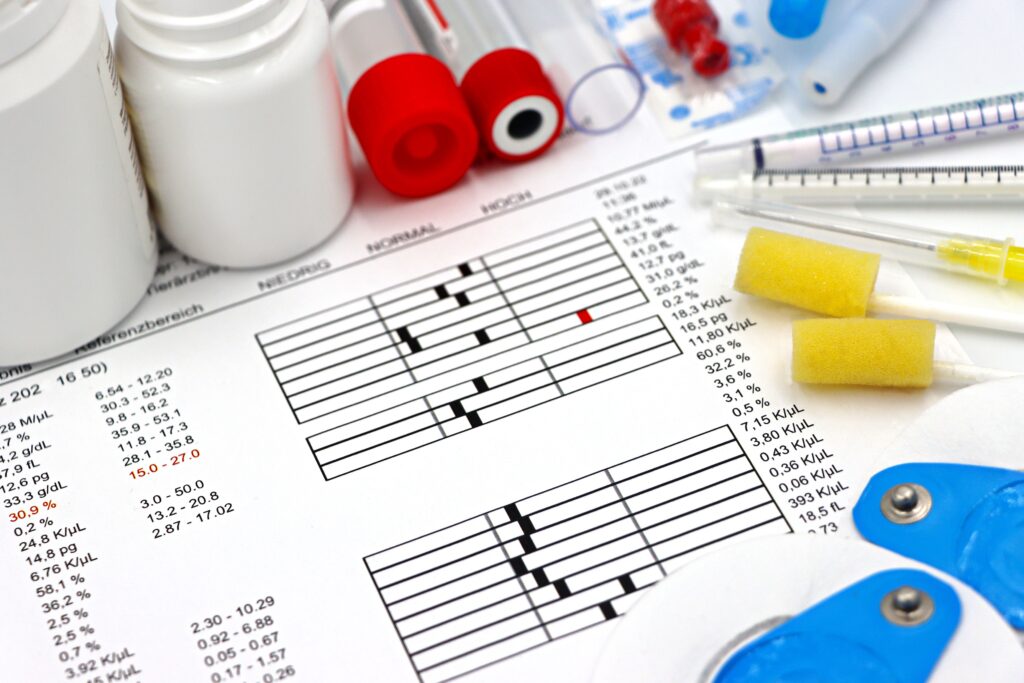
A thyroid panel returns numerical values, but those numbers should be interpreted carefully. The reference ranges printed on a lab report are general guides, and ranges can vary by laboratory. Your primary care provider considers the results alongside symptoms, age, medications, health history, and other lab results.
A TSH level within the expected reference range often suggests that thyroid hormone production is generally balanced. A higher TSH result may suggest that the thyroid is not producing enough hormone, while a lower result may suggest that the thyroid is producing too much. However, a single result does not always tell the full story.
A mildly abnormal or borderline result may not require immediate treatment. Your doctor may recommend repeating the test after several weeks to see whether the value changes, stabilizes, or returns to normal. This can be especially important when symptoms are mild, when recent illness may have affected results, or when subclinical hypothyroidism is being considered.
When results fall clearly outside the expected range, your provider may discuss what the pattern suggests. A high TSHwith low free T4 may point toward hypothyroidism. A low TSH with high free T4 or elevated T3 may suggest hyperthyroidism. Additional testing, medication review, imaging, or specialist referral may be recommended depending on the situation.
Your doctor may also compare your thyroid results with other markers. For example, changes in cholesterol, blood sugar, kidney values, or a metabolic panel may provide additional context about how your body is responding overall.
Conditions Thyroid Testing May Help Identify
Thyroid testing through primary care may help identify or rule out several conditions that affect hormone production and metabolism. These conditions can develop gradually, and symptoms are sometimes subtle at first.
Hypothyroidism occurs when the thyroid does not produce enough hormone for the body’s needs. Patients with an underactive thyroid may experience fatigue, weight gain, constipation, dry skin, cold sensitivity, low mood, and difficulty concentrating. The condition may be related to autoimmune disease, prior thyroid treatment, medication effects, or other medical factors.
Hyperthyroidism occurs when the thyroid produces too much hormone. Patients with an overactive thyroid may experience weight loss, anxiety, tremors, sweating, heat sensitivity, rapid heartbeat, trouble sleeping, or muscle weakness. Graves’ disease is one possible autoimmune cause, though other causes may also be considered.
Hashimoto’s thyroiditis is an autoimmune condition in which the immune system affects the thyroid gland over time. Some patients have normal hormone levels early on, while others eventually develop hypothyroidism. TPO antibody testing may help your primary care doctor identify whether an autoimmune process may be involved.
Thyroid nodules may be noticed during a physical exam or found during imaging performed for another reason. Many nodules are benign, but your physician may recommend thyroid blood work, ultrasound, or additional evaluation depending on the size, appearance, symptoms, and hormone results.
Ongoing Thyroid Monitoring in Primary Care
A single thyroid blood test offers a snapshot. Ongoing thyroid monitoring through regular primary care visits can provide a clearer view of whether values are stable or changing over time.
Patients taking thyroid hormone replacement, such as levothyroxine, may need repeat TSH testing after a dosage change. Once levels are stable, your provider may recommend periodic monitoring based on your condition, symptoms, medication use, and overall health. The timing can vary from patient to patient.
Several factors may affect thyroid levels or medication needs, including weight changes, pregnancy, aging, missed doses, timing of medication, supplements, and other prescriptions. This is why patients should not adjust thyroid medication without medical guidance.
Even patients with normal initial results may need retesting if new symptoms appear or risk factors change. Your physician may include thyroid screening as part of routine blood work when symptoms, age, family history, or other health concerns make it appropriate.
The value of testing through a consistent provider is continuity. Your doctor can compare current results with past values, review symptoms over time, and connect thyroid findings to broader lab trends in your chart.
Thyroid Health and Other Body Systems
Thyroid hormones influence many organ systems, so an imbalance may affect areas of health that patients do not immediately associate with the thyroid.
Cholesterol may be affected by low thyroid function. When the thyroid is underactive, the body may clear LDL cholesterol more slowly. If a lipid panel and thyroid results are both abnormal, your provider may review whether thyroid function could be contributing to the pattern.
The heart can also be affected. An overactive thyroid may increase heart rate, cause palpitations, or contribute to rhythm concerns in some patients. If you report racing heartbeat, shortness of breath, or chest discomfort, your provider may consider an EKG test along with lab work when clinically appropriate.
Mood and mental clarity may shift with thyroid changes as well. Hypothyroidism may be associated with brain fog, slower thinking, fatigue, or low mood. Hyperthyroidism may be associated with anxiety, irritability, restlessness, or sleep difficulty. Because these symptoms overlap with many other medical and mental health concerns, primary care evaluation can help guide the next steps.
Bone health, menstrual regularity, digestive function, energy levels, and temperature sensitivity may also be influenced by thyroid hormone levels. When multiple systems seem affected at the same time, your doctor may include thyroid testing as part of a broader workup.
Preparing for a Thyroid Blood Test
Most thyroid blood tests do not require fasting. However, your provider may recommend fasting if your lab order also includes other tests, such as a lipid panel or metabolic panel. Following the instructions from your doctor’s office is the best way to prepare.
Some providers prefer morning testing because TSH levels can fluctuate during the day. Your doctor may also ask about medications, supplements, or biotin use because some products can interfere with certain lab tests. You should not stop a prescribed medication unless your provider specifically tells you to do so.
If your blood work includes multiple tests, reviewing fasting instructions before your appointment can help avoid delays or repeat testing. Staying hydrated with water is usually helpful unless you have been given different medical instructions.
FAQ
What Is the Difference Between a TSH Test and a Thyroid Panel?
A TSH test measures thyroid-stimulating hormone, which reflects how strongly the pituitary gland is signaling the thyroid. A thyroid panel may also include free T4, free T3, and thyroid antibodies. Your provider may start with TSH and expand testing if symptoms or results suggest the need for more information.
Do I Need to Fast Before Thyroid Blood Work?
Most thyroid blood work does not require fasting. However, fasting may be needed if your provider also orders a lipid panel, metabolic panel, or other labs at the same time. Always follow the instructions given by your doctor or lab team.
How Often Should Thyroid Levels Be Checked?
Testing frequency depends on symptoms, risk factors, diagnosis, and medication use. Patients on thyroid medication may need closer monitoring after dosage changes, while patients without known thyroid disease may only need testing when symptoms or risk factors appear. Your primary care physician can recommend a schedule based on your health profile.
Conclusion
A thyroid blood test can provide helpful information about TSH levels, thyroid hormone production, autoimmune patterns, and possible causes of symptoms such as fatigue, weight changes, palpitations, or mood shifts. Still, lab results are only one part of a complete medical evaluation.
Individual results vary, and thyroid symptoms can overlap with many other conditions. Testing, treatment, and follow-up decisions should be made with a licensed healthcare provider who can review your full medical history, current symptoms, medications, and overall health.
Ready to better understand your symptoms and lab results? Schedule an appointment with Blue Point Medical Group to discuss thyroid testing with a primary care doctor.
This article is for informational purposes only and does not constitute medical advice, diagnosis, or treatment. Individual results vary. Testing and treatments may have risks, limitations, or contraindications. Always consult a licensed healthcare provider before making decisions about your health or changing your treatment plan.