
If you’ve noticed shortness of breath, a lingering cough, or a feeling that your lungs work harder than they should, it’s natural to worry about what it could mean. Some people fear a serious lung condition, while others wonder if stress, allergies, or a respiratory infection is the real culprit. A pulmonary function test is often one of the most practical ways to start getting clarity—without guessing.
These lung function tests are sometimes called pulmonary function tests because they evaluate pulmonary function through a set of measured breathing tasks. In primary care, they help your healthcare provider understand how your lung function compares with expected normal values, and how that information could guide next steps—whether that’s reassurance, lifestyle changes, further testing, or a targeted treatment plan.
Patient Concern: “Do I Need This Test, or Am I Overreacting?”
A common fear is that needing pulmonary function tests PFTs automatically means you have lung disease. In reality, these tests are often ordered because symptoms can overlap across many health conditions, and it’s safer to measure what’s happening than to rely on assumptions. Even healthy people can experience temporary breathing changes after illness, poor sleep, or reduced fitness, and testing can help separate short-term changes from patterns that deserve follow-up.
Another concern is whether the test will feel uncomfortable or triggering if you’ve already been struggling to breathe. Most breathing tests are noninvasive and designed to be brief, coached, and paced. Your provider’s goal is not to “push you to the limit,” but to gather accurate results that reflect how your lungs handle airflow and gas exchange during simple tasks like taking a deep breath and blowing out steadily.

Is a Pulmonary Function Test the Same as a “Breathing Test”?
Yes, a pulmonary function test is a category of breathing tests that can include several components, depending on your symptoms and history. Some parts focus on airflow, others on lung volume, and others on how efficiently your lungs move gases across the lung membrane.
When your provider says you’re scheduled for lung function tests, it usually means they’re trying to check lung function in a structured way—especially if symptoms have been persistent, unexplained, or connected to known risk factors like smoking, occupational exposures, asthma history, or recurring infections.
Can Test Results Explain Symptoms Even if My Chest X-Ray was Normal?
Often, yes. Imaging can look normal while airflow measurements show patterns of narrowing or reduced capacity. A test may help detect narrowing in airways or highlight changes consistent with obstructive lung diseases, even when a basic image doesn’t show clear structural changes.
It can also support decision-making about whether additional evaluation is needed. Sometimes the purpose is simply to document a baseline—so your provider can track changes over time and adjust your treatment plan thoughtfully.
What Pulmonary Function Tests Measure
In simple terms, these tests evaluate how much air you can move in and out, how fast you can move it, and how well your lungs participate in gas exchange. That includes how effectively your lungs absorb oxygen and release carbon dioxide, which can be important if you feel fatigued, winded, or limited during daily activity.
Your provider will interpret values in context, comparing your results with expected normal range estimates based on factors like age, height, sex, and sometimes ethnicity. This comparison helps determine whether your numbers fall within typical normal values or whether there’s a pattern that suggests a specific category of breathing limitation.
What is Spirometry, and Why is it the Most Common Lung Function Test?
A spirometry test is the most widely used tool in lung function tests because it’s quick, repeatable, and highly informative. It uses a handheld device—a small electronic machine connected to a mouthpiece—to measure airflow as you inhale and exhale with coaching.
Because spirometry measures both the amount of air you exhale and the speed of exhalation, it can reveal patterns that suggest obstructive conditions like chronic obstructive pulmonary disease or other obstructive lung diseases. It can also help your provider assess symptom severity and response to therapy over time.
What do Forced Expiratory Volume and Forced Vital Capacity Mean?
Two key spirometry numbers are forced expiratory volume (often the first second of exhalation) and forced vital capacity (the total amount exhaled after a full inhalation). These are often discussed together because their relationship can show whether airflow is limited by narrowing or blockage.
The term expiratory volume may also appear in reports, and it simply reflects the measured air leaving the lungs during forced exhalation. These values are part of what the test measures, and your provider will interpret them with your symptoms and exam, not as a standalone label.
Why “How Much Air” and “As Much Air” Can Change the Diagnosis
Many people can breathe in normally but struggle to exhale fully, leaving air trapped in the lungs. That can affect exercise tolerance and the sensation of breathlessness. Measuring how much air you can exhale and whether you can empty the lungs effectively gives important clues.
Some tests also look at the total volume your lungs can hold—your total lung capacity—which can help distinguish between obstruction (difficulty getting air out) and restriction (difficulty expanding the lungs). This is one reason pulmonary function testing can sharpen diagnostic accuracy.
When Primary Care Uses PFTs to Guide Next Steps
In a primary care setting, PFTs often support evaluation of chronic cough, wheeze, shortness of breath, or recurrent bronchitis-like illness. They can help your healthcare provider diagnose whether symptoms align with asthma patterns, chronic lung disease, or post-infectious changes after a respiratory infection.
They can also be used to monitor known conditions such as pulmonary fibrosis or cystic fibrosis, or to track function after environmental exposures. In some cases, testing is part of pre-procedure planning—helping clinicians assess whether a person may tolerate surgery, especially after abdominal surgery or when there are concerns about the breathing muscles and recovery.
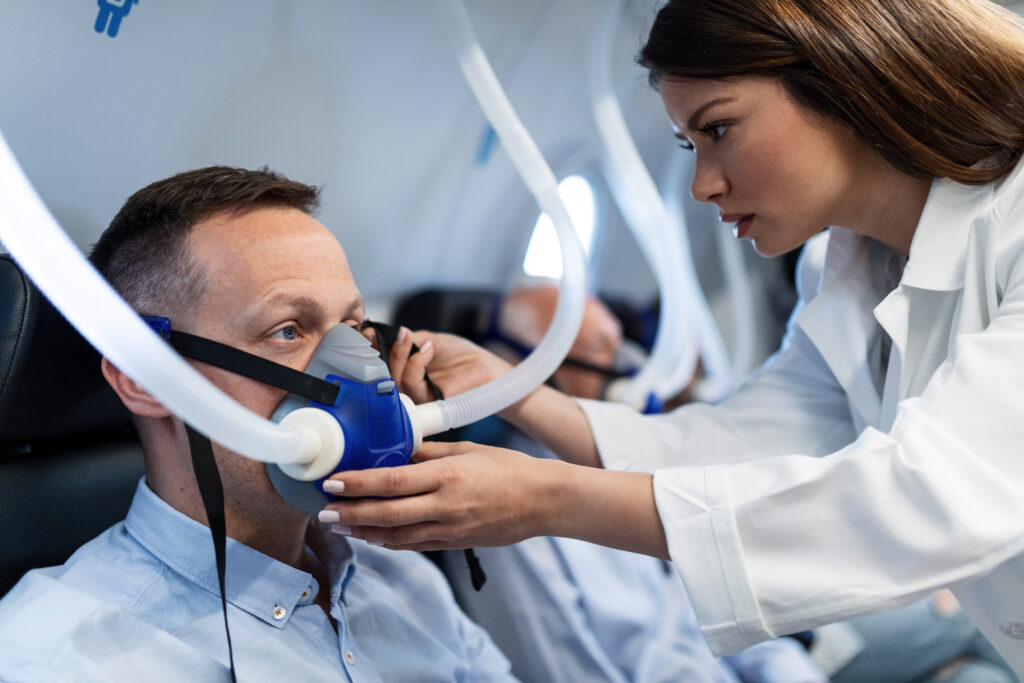
Could This Test Help if I’m Worried About Chronic Obstructive Pulmonary Disease?
If there’s concern about chronic obstructive pulmonary disease, spirometry is one of the foundational tools used to evaluate obstruction. It doesn’t “prove” a diagnosis by itself, but it provides objective data that supports clinical reasoning—especially when paired with a history of smoking or relevant exposures.
Importantly, testing can also identify early airflow changes, which may allow earlier, more tailored interventions. Even if the findings are mild, having a baseline helps your provider monitor trends and adjust care before symptoms become more limiting.
What if My Provider is Monitoring Lung Cancer or Another Lung Disease Concern?
A pulmonary function test is not a screening tool for lung cancer, but it can still be relevant when evaluating overall lung health. If a patient has known risk factors or is undergoing evaluation for a lung mass, function testing may help assess current capacity and inform broader planning.
When symptoms overlap—like cough, shortness of breath, or fatigue—testing can clarify whether there’s a functional limitation that needs separate management, even while imaging and other tests evaluate structural concerns.
What You’ll Do During Lung Function Testing
Most people start with spirometry, where you’ll take a deep breath, seal your lips around the mouthpiece, and exhale forcefully with coaching. You may repeat efforts several times to ensure consistency, because reproducibility is part of what creates accurate results.
Many setups include a soft clip or nose clips to prevent air from escaping through the nose. That can feel odd at first, but it helps ensure the air you breathe out is measured correctly through the device.
Will Breathing Medicines or Certain Medicines Affect Test Results?
They can. Some clinics may give instructions about pausing breathing medicines before testing, depending on why the test is being performed. Other certain medicines—including some heart medications—can also influence breathing, exercise tolerance, or measurements in subtle ways.
The safest approach is to bring a complete medication list and follow your provider’s guidance. Your clinician will weigh the need for baseline measurements against the need to keep you comfortable and stable during the test.
What Are “Normal Values,” “Normal Range,” And Test Measures Really Telling Me?
Normal values and normal range are reference estimates, not a judgment of your overall health. They help your provider compare your results to expected patterns and decide whether your measurements suggest obstruction, restriction, or normal variation.
Your report may include multiple test measures, and interpretation depends on the pattern across values, not a single number. That’s why it’s helpful to review test results with a clinician who can connect the data to symptoms, exam findings, and history.
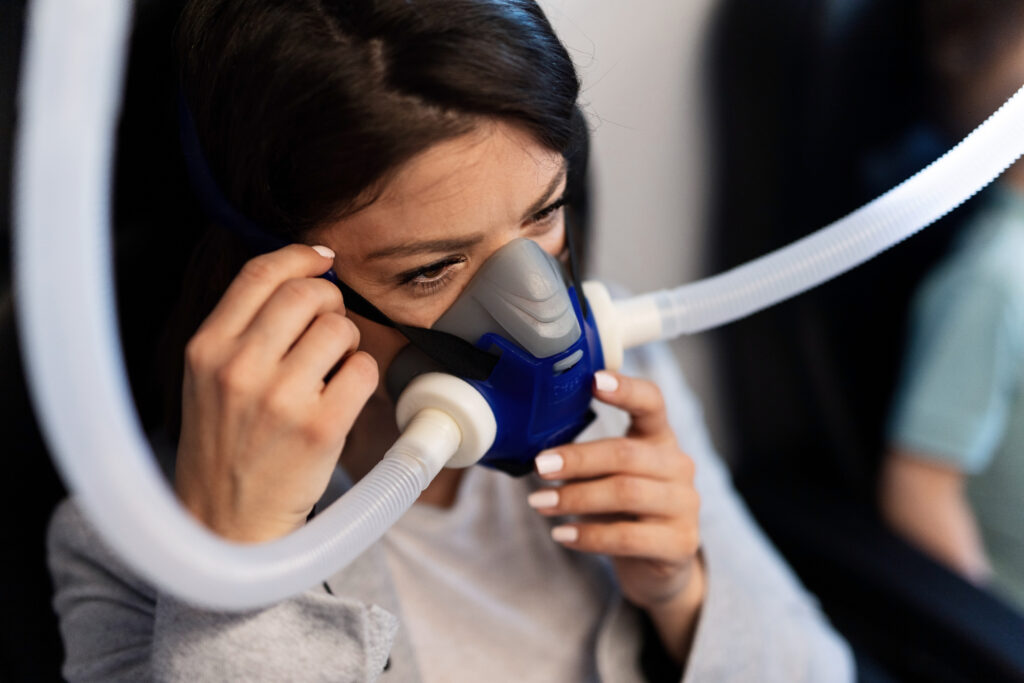
Gas Exchange Testing: Lung Diffusion Capacity and Carbon Monoxide
Some evaluations include a lung diffusion capacity test, which estimates how effectively gases move from the air sacs into the bloodstream. This may be especially relevant when symptoms suggest reduced oxygen transfer, unexplained shortness of breath, or certain interstitial conditions.
This test commonly uses a tiny, safe amount of carbon monoxide gas (and sometimes other tracer gases) to estimate diffusion efficiency. You may see the term carbon monoxide in your report, which can be alarming, but the test uses a controlled amount designed for measurement, not toxicity.
How Much Oxygen do Lungs Absorb During Normal Gas Exchange?
At a high level, your lungs take in oxygen,n and your blood carries it to tissues, while carbon dioxide is removed and exhaled. A diffusion test helps estimate how efficiently that transfer happens across the lung membrane, which can be affected by inflammation, scarring, or certain vascular issues.
If you’ve wondered how much oxygen your lungs can effectively transfer—especially if you feel winded out of proportion to activity—this test can add meaningful context to the overall PFT picture.
What Does Carbon Monoxide Gas Measure in The Diffusion Capacity Test?
In diffusion testing, carbon monoxide gas is used because it binds to blood efficiently, allowing clinicians to estimate transfer capacity across the lung membrane. The number does not diagnose a single disease on its own, but it can supportthe evaluation of conditions that affect the lung’s surface area or blood flow.
Results may be interpreted alongside other findings—spirometry, lung volume, symptoms, and sometimes additional tests. The goal is a balanced interpretation that helps your provider create a rational, patient-specific plan.
When Cardiopulmonary Testing Adds Clarity
If symptoms appear mainly with exertion, a provider may recommend exercise tests such as a cardiopulmonary exercise test. This can help determine whether breathlessness is primarily driven by lung limitation, cardiac factors, deconditioning, or a combination.
These tests may involve monitored activity on a treadmill or stationary bicycle, with measurement of breathing, heart rate, and oxygen usage. In certain settings—like complex illness or critical recovery—testing may relate to planning for rehabilitation, or understanding functional limits after hospitalization or intensive care.
Why Might my Provider Order a Cardiopulmonary Exercise Test?
A cardiopulmonary exercise test can provide a more integrated view of how your heart and lungs work together under stress. It may be recommended when standard PFTs don’t fully explain symptoms, or when you have multiple overlapping health conditions.
It can also help clarify whether the limiting factor is airflow, oxygen transfer, muscle efficiency, or cardiovascular response. That information can guide a more personalized approach to conditioning, medication review, and overall care planning.
Do Blood Pressure and Oxygen Measures Matter During Exercise Tests?
Yes, during exertion, clinicians often monitor blood pressure, oxygen saturation, and sometimes exhaled gases to understand how your body adapts. Abnormal responses can suggest that the issue is not purely “lung-based,” which can change the focus of evaluation and treatment.
For many patients, this is also reassuring. When data shows stable oxygen levels and an appropriate cardiovascular response, it can reduce uncertainty and help you focus on manageable next steps.

FAQ
What does a pulmonary function test show that a regular checkup can’t?
A pulmonary function test provides objective measurements of airflow, lung volume, and sometimes gas exchange that aren’t visible during a routine exam. It can help clarify whether symptoms align with obstruction, restriction, or normal variation. Your provider then interprets those findings alongside symptoms and history.
Can pulmonary function tests diagnose chronic obstructive pulmonary disease?
They can support evaluation for chronic obstructive pulmonary disease, especially with spirometry patterns and relevant risk factors. A diagnosis still depends on clinical context, symptoms, and sometimes additional evaluation. The main value is helping your provider understand severity and guide a realistic treatment plan.
What should I expect during lung function tests like spirometry?
You’ll breathe into a mouthpiece connected to a small electronic machine, often with nose clips or a soft clip to prevent air leakage. You’ll be coached to take a deep breath and exhale forcefully several times to ensure reliable measurements. The process is typically brief, and breaks are available if you feel lightheaded.
Conclusion
If you’re living with ongoing breathing issues, a persistent cough, or a lingering sense that your lungs work harder than they should, it’s easy to feel stuck between “maybe it’s nothing” and “what if it’s serious.” A pulmonary function test can help replace uncertainty with measurable information—showing how your airways move, how much air, how your lungs handle gas exchange, and whether your results fall withinthe expected normal range for you. That clarity matters because it helps your healthcare provider connect symptoms to a realistic, individualized treatment plan, instead of relying on trial-and-error or assumptions.
At BluePoint Medical Group, we use pulmonary function tests PFTs as part of a patient-first diagnostic process—reviewing your health history, potential risk factors, and your test results in context so you understand what they may (and may not) mean. If you’re scheduling a test, waiting for results, or unsure whether you should check lung function at all, contact BluePoint Medical Group to schedule a consultation. We’ll walk you through what to expect, discuss next steps if something looks abnormal, and help you choose a plan that supports both your day-to-day comfort and your long-term lung health—without pressure and without exaggerated promises.