
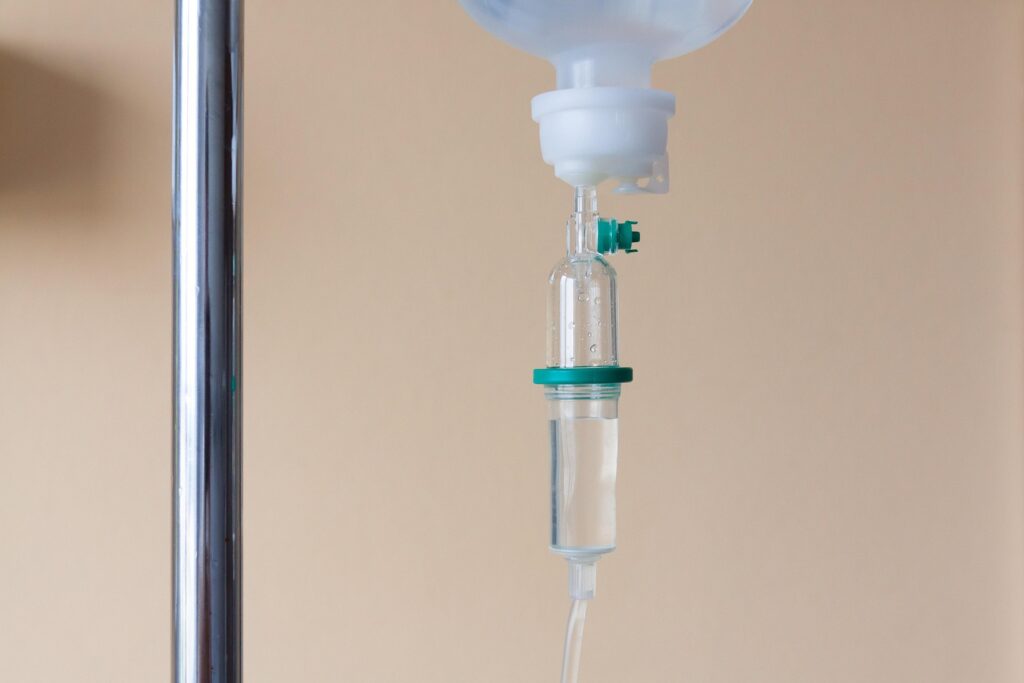
NAD+ IV therapy has become one of the most-searched wellness treatments in Las Vegas, promoted as a way to boost energy, sharpen focus, and support cellular health. The biology behind NAD+ is real: it’s a coenzyme your cells depend on for energy production and repair, and levels decline with age. What’s less settled is what happens when NAD+ is delivered directly into a vein through IV therapy. Intravenous NAD+ specifically has almost no dedicated human research, and the one study that looked at it directly found a side effect pattern most marketing pages don’t mention.
NAD+ functions in cellular energy and repair
Nicotinamide adenine dinucleotide, or NAD+, is a coenzyme every cell in your body uses to convert food into usable energy. It acts as an electron shuttle, moving electrons between reactions so your cells can generate ATP, the molecule that powers nearly everything a cell does.
Beyond energy production, NAD+ also supports DNA repair and helps protect cells from ongoing damage. According to the Cleveland Clinic, NAD+ levels decline with age, which is part of why the compound has drawn interest from aging and longevity research.
That cellular role is well established and backed by decades of biochemistry. What’s far less settled is whether adding more NAD+ through an IV changes how your body ages or how you feel day to day.

Current NAD+ research and limitations of the evidence
Most of what gets called NAD+ research in wellness marketing is about oral precursors: compounds like nicotinamide riboside (NR) and nicotinamide mononucleotide (NMN) that your body converts into NAD+, not IV infusions of NAD+ itself. A systematic review published in the American Journal of Physiology-Endocrinology and Metabolism looked at 10 randomized trials of oral NAD-boosting supplements, covering 489 people across conditions ranging from chronic fatigue to prediabetes. Supplementation was generally well tolerated, but side effects such as muscle pain, fatigue, headache, and sleep disturbance showed up in every trial reviewed.
Other reviews describe a similar pattern: a real biological rationale paired with thin clinical evidence. A 2020 review in Pharmaceuticals noted that only a small number of adequately powered randomized trials of NAD-boosting therapies exist at all, with results the authors called “promising, yet still speculative” and limited to psoriasis and skeletal muscle activity, not the energy, cognition, or anti-aging benefits featured in most marketing. A broader review in Experimental Gerontology found the same imbalance from another angle: of 147 total articles on NAD+ and aging, only 34 were clinical studies, and the rest were preclinical or animal research.
IV NAD+, as opposed to oral precursors, has almost no dedicated human research behind it. One randomized, placebo-controlled trial comparing IV NAD+, IV NR, oral NR, and placebo is registered with ClinicalTrials.gov (NCT06382688), but as of this writing, it exists only as an unpublished preprint, not a completed, peer-reviewed study. The evidence base for IV NAD+ isn’t just smaller than advertised. It sits close to the earliest possible stage of clinical testing.
IV NAD+ tolerability and reported infusion reactions
Only one study has looked directly at IV NAD+ tolerability in a real-world setting. A retrospective pilot published in Frontiers in Aging compared IV NAD+ with IV nicotinamide riboside in a small group of patients. Of the six people who received IV NAD+, all six reported moderate-to-severe reactions during the infusion, including abdominal cramping and diarrhea, nausea and vomiting, increased heart rate, and chest pressure.
Symptoms resolved once the infusion ended, and neither group had a serious adverse event. The eight patients who received IV NR tolerated it better, with five reporting only mild tingling or cramping.
The study’s authors list its limits themselves. It was retrospective rather than a randomized trial; the NAD+ group included only six people, and researchers ran no placebo comparison. Restore Hyper Wellness, a commercial IV therapy provider, funded and conducted the study, and every author worked for the company. The authors themselves flag that overlap as a potential source of bias.
None of that erases the finding, but it does mean the finding is an early, imperfect signal, not a settled fact. It remains the most direct real-world data available on how people tolerate IV NAD+, and it’s a detail absent from provider marketing pages, including the one run by the company that funded the study.
Physician-supervised NAD+ IV therapy in Las Vegas
Many Las Vegas IV therapy providers describe their services as physician-supervised, but rarely explain what that means in practice. In a medical setting, supervision starts before the infusion: a review of your health history, current medications, and any conditions that could make an infusion reaction more likely or harder to manage, such as significant heart, kidney, or liver conditions.
During the infusion itself, supervision means having someone trained to recognize an infusion reaction like the ones reported in the tolerability study above, and to slow, adjust, or stop the infusion if needed. Understanding medically supervised IV therapy in Las Vegas covers the broader distinction between IV therapy delivered inside a medical practice and IV therapy delivered at a wellness bar or drip lounge without that level of oversight.
Supervision also means being upfront about what the evidence supports. A physician who orders NAD+ IV therapy should be able to tell you plainly what’s established, what’s biologically plausible but unproven, and what side effects other patients have reported, rather than present a marketing benefits list as settled science.

Realistic expectations for NAD+ IV therapy benefits
Claims that NAD+ IV therapy reverses aging, sharpens cognition, or supports addiction recovery come up often in marketing, and they’re rooted in a real biological idea: NAD+ participates in energy production, DNA repair, and cell-signaling pathways connected to aging and brain function. That connection is biologically plausible. It is not the same as a clinically confirmed outcome.
The same applies to claims of immediate, measurable impact from a single infusion. No randomized trial identified in current research supports that kind of instant benefit from IV NAD+, for energy, cognition, or otherwise. What the evidence supports is more modest: a well-understood coenzyme, a small but real body of research on oral NAD+ precursors, and one small study on the intravenous form suggesting it may be harder to tolerate than advertised.
If you’re weighing NAD+ IV therapy, the more useful next step usually isn’t reading another benefits list. It’s asking a physician what’s known, what’s still unproven, and whether you’re a reasonable candidate given your own health history.
FAQ
What is NAD+ IV therapy?
NAD+ IV therapy delivers nicotinamide adenine dinucleotide directly into a vein. NAD+ is a coenzyme involved in cellular energy production, DNA repair, and other biological processes. Although its role in the body is well established, research on the clinical benefits of intravenous NAD+ remains limited.
Is NAD+ IV therapy proven to improve energy or cognition?
Current research does not confirm that NAD+ IV therapy reliably improves energy, cognition, or aging-related outcomes. Much of the available research focuses on oral NAD+ precursors rather than intravenous NAD+ itself, and dedicated human studies of the IV form remain limited.
What side effects have been reported during NAD+ IV therapy?
A small retrospective study reported abdominal cramping, diarrhea, nausea, vomiting, increased heart rate, and chest pressure among patients who received IV NAD+. The symptoms resolved after the infusion ended, but the study was small and did not include a placebo comparison.
Conclusion
The role of NAD+ in energy production, DNA repair, and cellular function is well established, but the evidence supporting intravenous NAD+ therapy is still developing. Most current research focuses on oral NAD+ precursors, while direct human studies of IV NAD+ remain limited. Early tolerability findings also suggest that some patients may experience infusion-related reactions, which makes careful screening, medical supervision, and a clear discussion of potential risks especially important.
For patients considering NAD+ IV therapy in Las Vegas, the most useful approach is to balance the biological rationale with the current limits of the evidence. A physician can help clarify what is known, what remains unproven, and whether this type of therapy is appropriate based on your medical history, current medications, and treatment goals.
If you are considering NAD+ IV therapy and want a clearer understanding of whether it may be appropriate for you, schedule an appointment with Blue Point Medical Group. A physician can review your health history, current medications, medical conditions, and wellness goals before discussing candidacy, potential risks, and realistic expectations.
This article is for informational purposes only and does not constitute medical advice. Always consult your physician or a qualified healthcare provider for questions about your health or before making changes to your treatment plan. Individual responses to IV therapy vary, and a physician consultation is the right setting to discuss candidacy.