
If you’ve been told you need an ekg test (also written as an ecg test), it’s normal to feel a mix of curiosity and worry—especially if the appointment comes after symptoms like chest discomfort, palpitations, dizziness, or shortness of breath. Many people hear “heart test” and immediately think of heart attack or heart disease, even when the goal is simply better clarity and safer decision-making.
An electrocardiogram is one of the most common ways healthcare providers check the heart’s electrical activity. It’s a quick test that can support patient care by helping your clinician understand your heart’s rhythm, heart rate, and how the electrical signals move through the heart. It doesn’t replace a full evaluation, but it can be a helpful starting point for understanding risk, guiding follow-up tests, and planning next steps.

Why would my provider order an EKG in primary care?
In primary care, an EKG is often ordered because it adds objective information to what you’re feeling, what your exam shows, and what your risk profile suggests. Your doctor may recommend it when you feel symptoms that could relate to heart problems, when you have a higher risk due to your health history, or when a clinician wants a baseline measure to compare against future test results.
It can also be part of heart health screenings—especially when there are multiple risk factors in play, such as high blood pressure, diabetes, or concerns about cholesterol. The goal is not to label you with a diagnosis on the spot, but to reduce uncertainty and decide whether you need monitoring, lifestyle support, medication review, additional blood tests, or another test that looks at blood flow and function more directly.
Is an EKG the same as an ECG test, and why do I see both spellings?
Yes—ekg and ecg refer to the same test: the electrocardiogram. “ECG” comes from the English term electrocardiography, while “EKG” reflects the German spelling (from Elektrokardiogramm). In practice, your healthcare providers may use either abbreviation interchangeably, and your printed report might show ecg even if the appointment was scheduled as an ekg test.
What matters most is what the test measures: the timing and pattern of your heart’s electrical activity. That pattern helps clinicians interpret whether your heartbeats appear regular, too fast, too slow, or potentially consistent with certain heart conditions that warrant a closer look.
What the EKG test actually measures: your heart’s electrical activity in real time
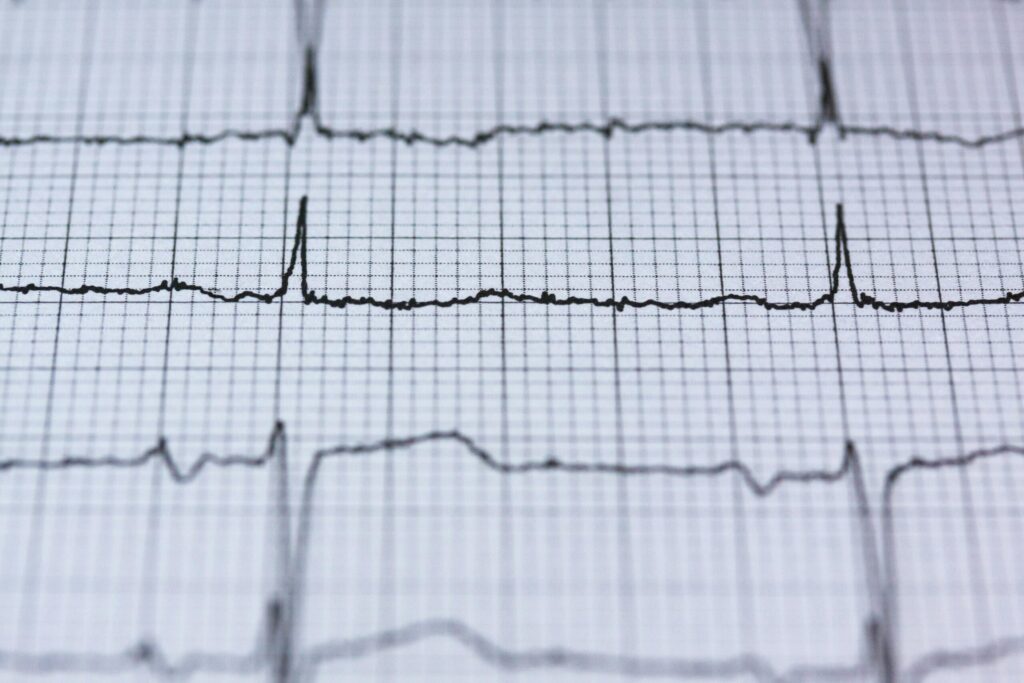
An EKG records the electrical signals that coordinate each heartbeat. With each beat, an electrical wave travels through the heart muscle and helps the heart contract in an organized way. The tracing created by the EKG shows the rhythm and rate of those electrical patterns over a very short time—often just seconds—making it a snapshot of your heart’s activity at that moment.
This is why an EKG can be reassuring when it’s normal, but also why it can’t answer every question by itself. Some rhythm changes come and go. If the abnormal pattern isn’t happening during the recording, your EKG may look normal even if you’ve had symptoms at other times.
Can an EKG test diagnose heart disease or a heart attack?
An EKG can support diagnosis, but it’s rarely the entire story by itself. In urgent settings, an EKG is commonly used to help evaluate a possible heart attack, because certain patterns can suggest heart muscle strain or decreased blood flow. In non-emergency settings, it may help identify rhythm problems, prior changes that warrant follow-up, or signs that guide additional testing.
That said, “abnormal” doesn’t automatically mean you have heart disease, and “normal” doesn’t always rule it out. Your provider may pair EKG information with symptoms, physical exam findings, blood tests, imaging, and a careful review of your risk factors. This combined experience is what helps your care team decide what matters now and what can be monitored over time.

How EKGs fit into cardiovascular risk: blood pressure, cholesterol, diabetes, and body mass index
Heart risk is rarely about one number. Cardiovascular risk often rises when several factors stack together—like high blood pressure, high cholesterol, diabetes, smoking history, family history, low physical activity, or a higher body mass index. These factors can increase long-term strain on the heart and blood vessels, raising risk for heart events such as stroke or heart attack, even if you currently feel okay.
This is where a primary care plan can be powerful. Your provider may use EKG results along with blood tests (for cholesterol, glucose, and other markers) to build a more complete picture of prevention. The Blood Institute—the National Heart, Lung, and Blood Institute within the NIH—describes the EKG as a simple, painless test that can be used during routine care to screen for heart disease and detect irregular rhythms.
If I only feel symptoms sometimes, will a quick test miss them?
It can. A standard resting EKG is often recorded over a short time—sometimes a very short time—so it may not capture rhythm changes that happen only once in a while. That doesn’t mean the test is useless; it means the result must be interpreted in context. A normal EKG can still be meaningful if it helps rule out certain urgent concerns, establishes a baseline, or guides your next step.
If symptoms are intermittent—like palpitations that come and go, or lightheadedness that happens randomly—your provider may recommend longer monitoring. That’s often where devices like a holter monitor or event monitor become more informative, because they track your heart’s rhythm over a longer window while you do normal activities.
What happens during an EKG in a provider’s office or hospital?
Most resting EKGs are done in a clinic or hospital setting. You may be asked to change into a hospital gown so the technician can place electrodes on clean, dry skin. Small sensors—often described as sticky patches—are placed on the chest and sometimes on the limbs. You’ll usually lie still and breathe normally while the machine records your heartbeat pattern.
The setup may take a few minutes, while the recording itself typically takes only a brief moment. Afterward, you can return to your day. For many patients, the hardest part is simply the uncertainty of waiting on the ekg results, which is why it helps to understand what an EKG can—and can’t—show.

Will I feel an electric shock or have skin irritation from the adhesive patches?
An EKG does not send electricity into your body, so you should not feel an electric shock. The sensors only read the heart’s natural electrical activity from the skin surface. The most common “side effect” is mild discomfort from removing the adhesive, or skin irritation—especially if you have sensitive skin or need repeated monitoring.
If you’ve had reactions to adhesives before, tell your provider ahead of time. In many cases, a simple adjustment—like different electrode materials or careful skin prep—can reduce irritation. If you’re wearing a monitor for longer periods, your provider may also advise how to protect your skin while keeping the reading accurate.
When would my provider recommend a Holter monitor, an event monitor, or a stress test instead?
If your clinician suspects an intermittent rhythm issue—or if your symptoms don’t match what your resting EKG shows—longer monitoring may be more useful. A Holter monitor records continuously for a day or two, while an event monitor can be worn longer and may record during symptoms or at intervals, depending on device type. These approaches are often used when your symptoms occur during daily life, and you want to catch what happens during those moments.
A stress test is different: it evaluates how your heart responds to exertion, which can help assess exercise tolerance and possible blood-flow-related concerns. Your provider may choose one test over another based on your symptoms, your baseline EKG, your overall health, and your personal risk factors—because the “best” test depends on what question your care team is trying to answer.
What does it mean if my EKG results are abnormal?
An abnormal EKG can mean many things, and not all of them are dangerous. Sometimes the pattern reflects a normal variant for your body, a temporary change (like dehydration or stimulant use), or an issue outside the heart—such as certain lung conditions—that can affect how the tracing appears. Other times, it may suggest a rhythm problem, conduction delay, or a pattern that needs follow-up testing.
If your provider is concerned about a specific rhythm disorder—such as atrial fibrillation, which can raise stroke risk—they may confirm the finding with repeat testing, longer monitoring, and targeted labs. The Merck Manual Consumer Version notes that electrocardiography confirms atrial fibrillation patterns and that clinicians often do blood tests as part of the evaluation, depending on the suspected cause and your overall presentation.
Benefits and considerations: what an EKG can do well, and where it has limits
One of the biggest benefits of an EKG is speed: it’s accessible, noninvasive, and can provide immediate information about rhythm and electrical conduction. That can be reassuring if you’re anxious about symptoms, and it can support timely decisions in clinic or urgent care settings. It also helps clinicians compare your current tracing to future tracings—an important part of longitudinal patient care.
At the same time, the test is only one piece of evidence. Because it’s a snapshot, it may not capture intermittent symptoms. And while it can support diagnosis, many heart conditions require a broader workup that might include blood tests, imaging, or monitoring over time. The most patient-centered approach is to treat the EKG as a tool—one that supports decisions rather than replacing a full clinical conversation.

FAQ
How long does an EKG test take?
The recording itself usually takes only seconds, but the full visit may take several minutes for setup and electrode placement. Your provider may also spend time discussing symptoms and reviewing next steps, depending on your situation.
Do I need to prepare for an electrocardiogram?
Most people don’t need special preparation. It can help to wear easy-to-remove clothing and avoid lotions on the chest area so the sticky patches adhere well, especially if you’re concerned about accurate contact.
Can personal devices replace an in-office ECG test?
Some personal devices can capture limited rhythm data, which may help document symptoms—but they don’t fully replace a standard medical EKG interpretation. If you’re using a device and still feel symptoms, it’s worth reviewing the data with your provider for proper context.

Conclusion
If you’ve been referred for an ekg test, or you’re wondering whether your symptoms and risk profile warrant heart testing, BluePoint Medical Group can help you make sense of what to do next. In a primary care setting, your provider may review your blood pressure, medications, family history, body mass index, and any recent blood tests to decide whether an EKG alone is sufficient or whether monitoring or a stress test is more appropriate.
Results and recommendations can vary based on individual factors, and all testing carries potential limitations or follow-up needs. The safest next step is a consultation with a licensed provider who can interpret your EKG in context, explain what it means for your health, and create a preventive plan that fits your goals. Schedule a consultation with BluePoint Medical Group to review your heart health concerns and plan the right next step with clarity and care.